
Make the person memorable.
Consistent identity, portraiture, and approachable language give the experience a recognizable human center.
Jamie Chevon / Real Estate
A closer look at Jamie Chevon McClain’s website: a warm introduction, clear navigation, and space for the details that make a place feel like home.
Explore the live website ↗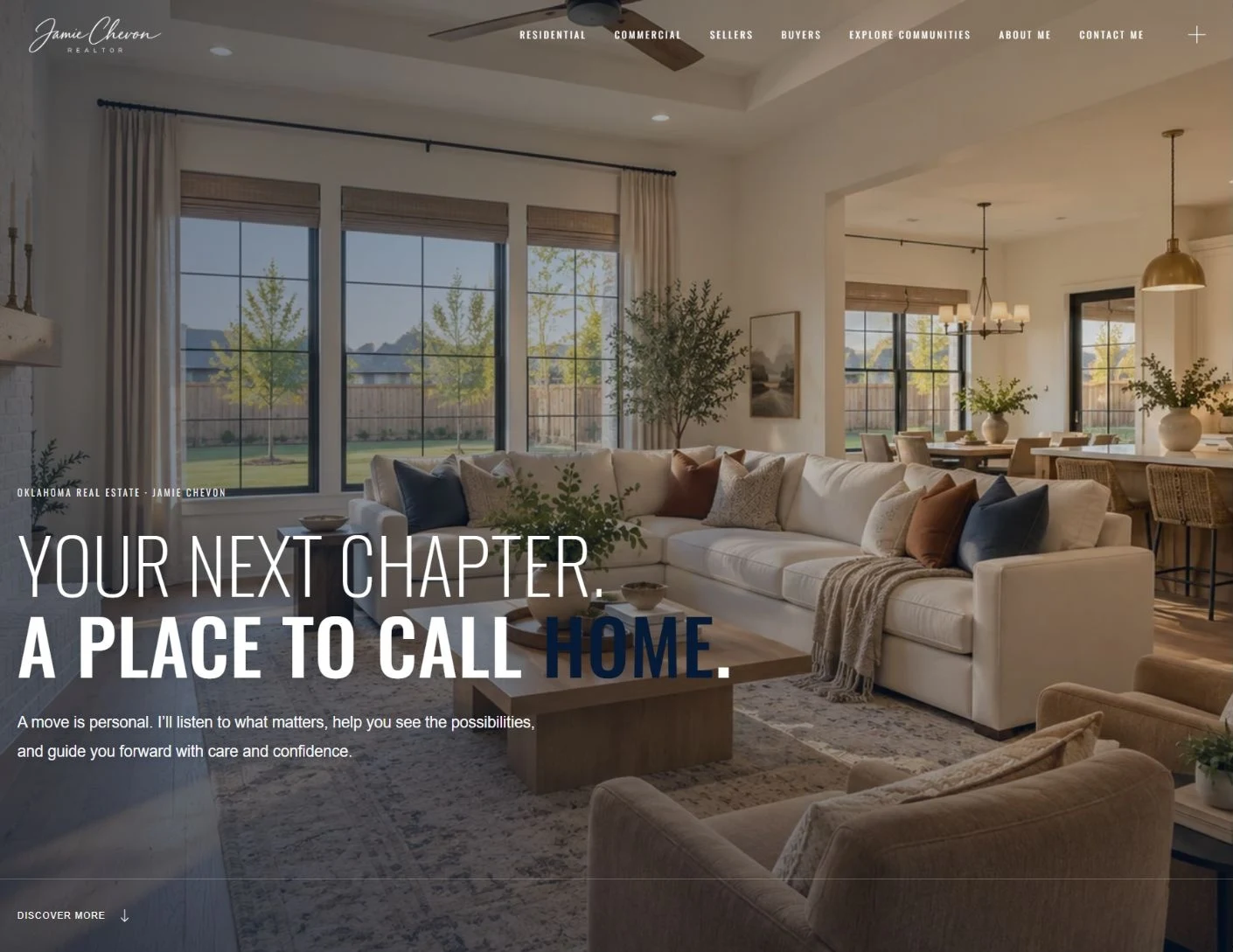 A distinct presence.
01 / Positioning Jamie
The strategic purpose is to connect useful real estate exploration with a clear sense of the person who will guide the next step.
Property information can attract attention. A distinct personal experience gives visitors a reason to remember the agent behind it. Jamie’s website brings her voice, local focus, and approach into the same experience as buyer, seller, and community discovery.
That structure is designed to support a progression: understand who Jamie is, find information relevant to a move, and feel comfortable starting a conversation. It creates a foundation for business development without treating every visitor as ready to inquire immediately.
This case study explains that strategy and the visible website. It does not claim measured growth in leads, rankings, or revenue.
Consistent identity, portraiture, and approachable language give the experience a recognizable human center.
Distinct routes for buyers, sellers, commercial interests, and community exploration help people find a useful starting point.
Invitations to connect turn exploration into an opportunity for a relevant conversation when a visitor is ready.
02 / Explore the strategic journey
Select a perspective to explore the purpose behind the interface.
A buyer needs to connect a property with the life they want to live. Community context and property information support that decision.
03 / The creative direction
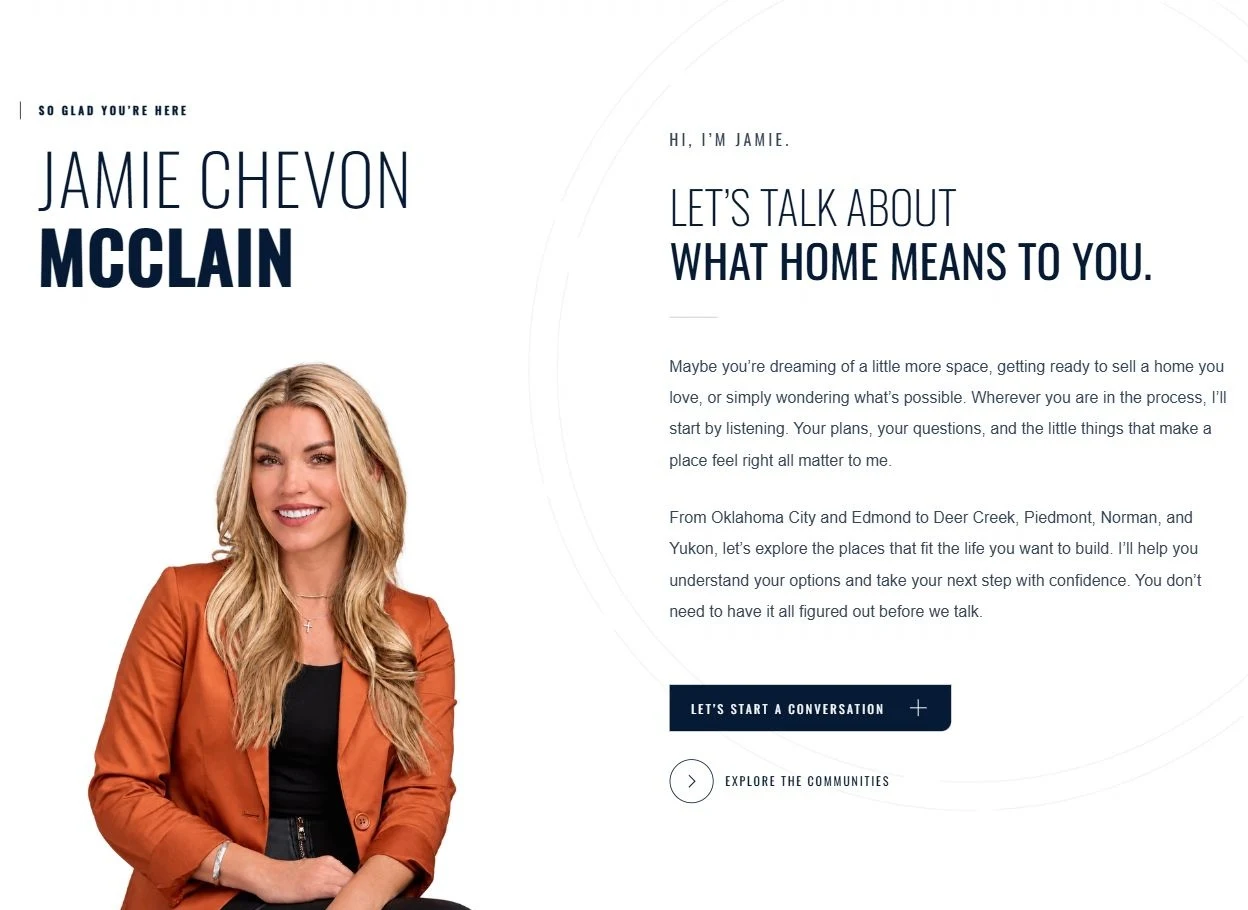
Warm interior photography establishes a sense of home before visitors explore the details. Confident typography and a restrained navy palette give the experience structure, while Jamie’s portrait and introduction keep it personal.
The design connects the emotional and practical sides of real estate. Buyers and sellers need facts, but they also need confidence in the person helping them interpret those facts.
Jamie’s introduction explains her approach to listening and guiding. Community information establishes geographic context. Clear next steps bring both back to a conversation.
04 / Custom property cards + MLS data
Averane designs custom property cards for Jamie’s website, with MLS information intended to populate the experience through the IDX integration.
Listing information and applicable display permissions.
The authorized connection to permitted listing data.
Jamie’s visual experience around the available fields.
A property detail and a relevant route to inquiry.
Photography attracts attention. Price, location, and essential property details help people decide whether to explore further. Listing status and required attribution must remain clear.
Custom design means considering the everyday realities of a feed: long addresses, missing photography, different property types, and changes in availability. The interface needs to remain coherent when the data is less tidy than a mockup.
Field availability, refresh behavior, display rules, and attribution depend on the IDX setup and relevant MLS requirements. A custom presentation does not override those requirements.
Loading, empty, and unavailable states matter, too. They should explain what is happening and offer a useful next step instead of leaving visitors at a dead end.
05 / The custom community map
The custom map connects geographic exploration with community knowledge, helping visitors form better questions before they speak with Jamie.
Inside the custom experience / Guided feature tour
What the visitor can do
Place labels and geographic context help visitors understand how communities relate before narrowing their search.
Why we designed it this way
A local guide should make the market easier to navigate. This overview gives Jamie’s knowledge a useful visual entry point.
What the visitor can do
The community selector is connected to the guide, neighborhoods, and map. The captured interface shows Edmond selected.
Why we designed it this way
Keeping the selection consistent across sections reduces the need to start over and keeps exploration focused.
What the visitor can do
The real schools layer adds school markers to the map. Other available controls include parks, landmarks, neighborhoods, and shopping.
Why we designed it this way
Visitors can investigate practical questions alongside geography. School assignment still requires address-specific confirmation with the relevant district.
What the visitor can do
The live interface accepts a city, address, neighborhood, or ZIP code as a starting point.
Why we designed it this way
A visitor with a property in mind can move directly into local context. This tour shows the control; use the live map to run a search.
The live community page also offers home-age, architectural-style, and setting filters; neighborhood detail views; and comparison of up to three selected neighborhoods. These tools connect discovery to a more informed conversation with Jamie, rather than leaving visitors with a collection of unrelated pins.
A list of place names tells someone where they can look. A thoughtful map helps them understand relationships between places. Paired with community content, it gives geographic exploration a practical purpose.
The site connects community discovery with neighborhood information, schools, shopping, parks, and trails. The strategic opportunity is to make Jamie’s local perspective useful while visitors are still considering their options.
This supports a more informed conversation: a visitor can arrive with a place, priority, or question in mind rather than starting from scratch.
Explore the actual community map ↗Geographic exploration works best with meaningful labels and relevant written context, giving visitors more than a pin on a map.
Community information helps visitors consider their own priorities. The experience should support exploration without assuming one area suits everyone.
A relevant invitation to connect gives Jamie an opportunity to respond to the interests a visitor has begun to identify.
Written community information should remain available alongside map interactions. Keyboard controls, focus states, and meaningful labels are important validation priorities; this is not a claim of a completed accessibility audit.
06 / SEO + GEO strategy
The foundation is a clear connection between Jamie, her services, the places she serves, and the questions her audience needs answered.
Buyer, seller, and community pages can answer distinct questions. Original local information should provide value rather than repeat place names around generic copy.
Generative engine optimization considers AI-assisted discovery. Clear identity, direct answers, factual context, and readable content help make information understandable. AI inclusion or citation cannot be guaranteed.
Once someone arrives, the page needs to answer their question, communicate Jamie’s relevance, and provide a useful next step.
07 / Data that informs the next decision
A useful measurement plan connects discovery, exploration, and inquiry quality. Page views alone cannot tell Jamie whether the website is supporting her business.
Start with clear event definitions, appropriate consent, reliable tracking, and a baseline. The framework below is proposed; it does not represent verified tracking installation or achieved results.
Review search queries, landing pages, and traffic sources to understand whether discovery aligns with Jamie’s services and market.
Assess community engagement and onward navigation. Once the feed is active, property-card clicks and detail views can help evaluate the discovery experience.
Distinguish contact clicks, form starts, and successful submissions. These are separate signals and should not all be counted as leads.
With appropriate consent and CRM practices, review inquiry quality and source context alongside Jamie’s own feedback.
Keep names, email addresses, message contents, and other personal details out of general analytics events. Define access, retention, and consent responsibilities.
Identify a specific friction point, make a focused change, and evaluate it against the baseline. Let evidence inform the next iteration.
08 / A foundation for momentum
Check content, journeys, responsive behavior, forms, accessibility, integrations, and search essentials. Treat feed approval as its own dependency.
Use reliable measurement and Jamie’s experience with inquiries to identify where visitors need more context or a clearer next step.
Review community information, maintain property connections, and develop content around real questions from buyers and sellers.
The objective is an experience that remains useful and recognizable as Jamie’s business evolves. Commercial outcomes require evidence over time; they are not established by launch alone.
The work / Explore the actual screens
Warm imagery and clear navigation introduce the person and the possibilities.
A dedicated starting point speaks to the priorities of someone looking for a home.
A different decision deserves its own language, reassurance, and next step.
Geographic context becomes part of the experience—not an afterthought beneath the listings.